


Microgrids, Mega-Impact
Designing and right-sizing resilience solutions
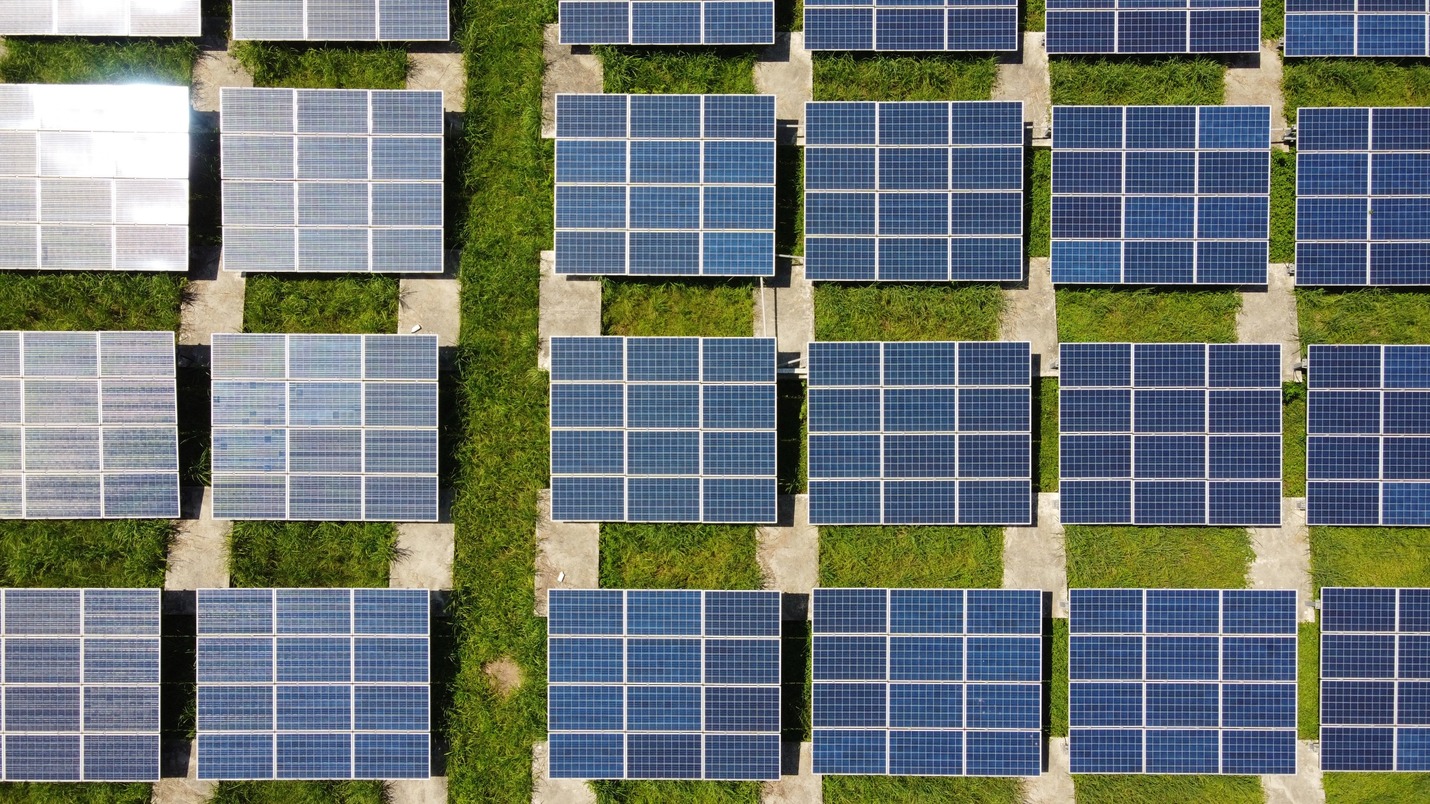
A historic transformation is underway: the emergence of microgrids powering our homes, buildings, and neighborhoods. The possibilities are…well, electrifying.
Enabled by a new generation of photovoltaic (PV) solar panels and battery-energy storage system (BESS) technologies, microgrids offer best-of-both-worlds advantages. During outages of utility-operated grids (the “macrogrids”, as it were), microgrids are islands of resilience through their onsite power generation. During normal conditions, microgrids hold the potential to reduce both electricity bills and operational emissions by adjusting when utility power is used. And by staying connected to the existing macrogrids, microgrids can deliver supplemental capacity during peak times and seasons, so utilities needn’t overbuild capacity or draw from fossil-fuel backups. Rather than an either/or proposition, it’s a case of “Yes, and…”
Yet despite the buzz around this emerging solution, microgrids are simply the latest chapter in a 150-year energy evolution. The 1880s witnessed the first examples of electrification to buildings and homes via hyper-localized generation systems– the original microgrids! The early 20th century brought larger, yet still localized city grids, thereby beginning the democratization of energy. In the 1930s, the United States became electrified at a large scale with centralized regional grids: a system remaining in place for generations.
Today’s microgrids represent a full-circle moment, restoring the benefits of localized control that were lost when transitioning to a centralized model, while reaping the easy access and expansive capacity of utility grids. All of which is nested within a global transformation from a fossil fuel-based system to renewable energy sources.
As Pulitzer Prize-winning author Richard Rhodes details in the 2018 book Energy: A Human History (highly recommended for all fellow energy nerds), historically such transitions are bumpy and take time. Often the establishment pushes back against new technologies, but eventually the benefits become undeniable and an inflection point is reached. That’s happening today as two major shifts – the transition towards renewable sources and the rethinking of system scale – accelerate in their adoption.
But microgrids are not simply an off-the-rack or plug-and-play solution. They’re an engineering challenge to be solved. How microgrids are tailored for each client’s budget and needs makes all the difference.
Microgrids and their Components
Microgrids are localized networks that generate, store, and distribute electricity, whether for a single building, a campus, or a district. The key differentiator between a microgrid and a basic onsite energy system is that microgrids can operate both in concert with or fully independent of the macrogrid. The feasibility of these systems has been greatly enabled by the continued improvement and affordability of renewable energy technologies. According to US Department of Energy statistics, prices for PV modules have dropped by 90% in the last decade, and generate double the electricity of panels built a decade ago.
As Princess Shuri wisely observed from her Wakanda innovation lab (in the Marvel movie Black Panther: Wakanda Forever), just because something works, doesn’t mean it can’t be improved. Solar panels transformed local energy generation and now battery energy storage systems have transformed what’s possible with solar panels. They store power generated by day for use at night…or, say, next week, and act as a regulator between the panels and the grid. Modern lithium-ion phosphate batteries entered the marketplace in the new millennium, and over the past 15 years, their costs have fallen by over 90%.
Regardless of whether they are powering one or several buildings, microgrids need a control system: the digital brain for a localized energy network. A control system autonomously manages and optimizes the operations of these interconnected energy resources. It matches real-time power generation with building or facility loads, adjusting power inverters to regulate system voltage and frequency. It is this controlling brain that makes the difference between grid-connected energy resources and a full microgrid.
The Value of Resilience
Today utility-owned macrogrids face unprecedented stresses. Climate change has brought extreme weather conditions —bigger storms, hotter heat waves, and in the western region, more frequent wildfires —leading to outages. When, where, and why electricity is needed is also increasing, due to the trifecta of transportation electrification, building electrification, and data centers. Utilities follow a unique financial model from their position as regulated monopolies with a directive to serve the public good. This model has historically been structured to incentivize growth and expansion. And while there is still some need for growth, we are no longer trying to electrify a nation. The new quest before us is to modernize the incredible network that has already been built so it is ready for a changing world. This means increased renewables, increased resilience, and increased flexibility – all of which are supported by microgrids.
Customer interest in microgrids also often starts with desired resilience. Yet the financial value is hard to quantify. How much is resilience actually worth?
That's why the co-benefits of these technologies become important. Even if resilience itself doesn't have quantifiable value, the capacity to generate and store energy onsite during normal conditions can provide value through operating-cost reductions.
When resilience is the driving factor, microgrids can pair PV-BESS systems with traditional backup generators to provide different layers of support. This way, even in the most extreme situations, it’s still possible to keep the power on and critical functions supported.
Tailoring Each Client's Resilience Solution
PAE’s process begins by asking clients, “What does resilience really mean to this project?” Whereas utility grids make it easy and affordable to power whole buildings, during resilience events this might require a prohibitively large and costly amount of battery storage. The question may shift from what a project wants to what it needs. It may want full-building backup, but may only need heating and power in a key area. We help clients navigate the often competing constraints of resilience goals, available space, and project budget by breaking it down: “How much space do you have? What’s the budget? What must keep operating, and for how long?”
Resilience solutions also require understanding the anticipated event: severe weather, earthquake, wildfire, or other unspecified utility outages. This determines the presumed length of time a microgrid must operate independently from the grid: a 90-minute evacuation, multi-day sheltering in place, or an indefinite off-grid duration. PAE’s Regenerative Design Group then pulls together estimated energy demands, on-site production and battery storage capacity into what’s called a microgrid model. Here PAE’s Resilience Tool, an internal tool, comes into play.
Because the microgrid’s available energy is often a limited resource, resilience is focused on the energy needs for an event. We ask clients to define a minimum requirement for battery time during winter, when PV energy generation is more limited (or even prevented altogether, in cases like heavy snowfall). And yet the battery that can provide, for example, four hours of electricity in a winter resilience event may support much longer periods of resilience in summer, perhaps up to a month, because of the increased solar resource. This battery-stored energy can also be tapped during times of day when the grid is at peak-usage and energy rates are highest, saving money.
Microgrids, as part of net-zero and net-positive building systems, help utilities reduce the need for over-building their own systems to meet peak capacity during seasons of high-energy usage (winter and summer) and during high-demand times daily (4pm-7pm, for example). Many utilities have programs incentivizing building owners to allow the utility to access and partially control their BESS as part of demand response and flexible load programs.
PAE’s knowledge of energy load profiles informs our microgrid analysis, which can help customers move forward by minimizing cost as a deterrent. We help clients make strategic decisions and balance competing interests.
Project Examples: Beaverton, PAE Living Building, Sunnyvale
PAE has completed many microgrid projects over the past six years, each an opportunity to deliver optimized solutions for our clients and to grow our expertise.
The Beaverton Public Safety Center, completed in 2020, was a unique collaboration between the community, city, and electrical utility. The 72,000-square-foot, all-electric building, designed by FFA Architecture, was one of PAE’s earliest microgrid projects and one of the region’s first. It participated in a pilot program and partnership in which Portland General Electric funded a microgrid comprised of a 300 kW solar photovoltaic array and 250 kW/1MWh battery storage system. The utility wanted more storage capacity for their systems, and more flexibility to tap grid-connected onsite batteries during peak times. The City of Beaverton needed resilience for its emergency-operations center. It was a win-win.
At the time, however, it was unprecedented for a utility to invest in batteries located on a customer’s site. Although the program didn’t expand beyond the pilot stage, the Beaverton Public Safety Center was influential and arguably ahead of its time. Today, similar pilot projects are happening around the nation.
The PAE Living Building in Portland, Oregon is a landmark of sustainable design and an ongoing laboratory for best practices. Completed in 2021 and collaboratively designed with ZGF Architects, the 58,000-square-foot structure is the world's largest commercial urban Living Building and the first led by a developer. It’s 61% more efficient than code, generates 113% of its annual energy needs, and gets 100% of its water from rain captured on the roof. It was constructed with 25% less embodied carbon than a typical building, and achieves negative operational carbon.
As owners and occupants of the PAE Living Building, we're continuing to watch how it performs, learning from it’s evolving systems, and applying lessons to the next generation of projects. We're working with microgrid vendors to advance controls' capabilities, and experimenting with how to reduce operating costs. The PAE Living Building is, as its name indicates, a living system that continues to inform our design and analysis approaches. It's helping us evolve so we can then help the industry evolve.
The first phase of Sunnyvale Civic Center’s campus demonstrates what’s possible for microgrid-enabled resilience and net-zero energy design on a larger scale. A new LEED Platinum-rated City Hall, Library, and Emergency Operations Center were paired with a renovated existing public safety building, all designed by SmithGroup, with expansive landscaped public spaces across a 26-acre, tree-rich site as part of a holistic approach to place-making and sustainability.
This project redefines the modern civic center as both a high-performing building and a welcoming public gathering place. Sunnyvale Civic Center provides a national model for sustainable, resilient civic design, highlighting solar and energy systems as community assets.
A New Era
It’s an exciting time to have a front-row seat as a new era of energy systems comes forth. After generations of receiving our energy almost exclusively from regional utility grids, the system is transforming. We’re not abandoning the benefits that macrogrids provide, but the rise of microgrid systems is giving building owners greater autonomy, savings, and resilience. This new era for alternative scales of energy systems brings the potential to reimagine how we harness and deliver energy to our modern world.
Karina Hershberg, Associate Principal
Passionate about sustainability, Karina has over 15 years of experience with systems modeling, data analysis and electrical engineering. She leads the development of microgrid design, emissions analysis, and campus-scale solutions for the firm and is a regional leader for PAE’s Regenerative Design Group.